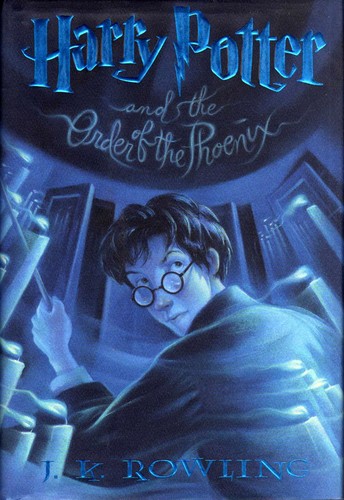
Harry Potter and the Goblet of Fire (2000) is the fourth novel in J.K. Rowling’s Harry Potter series. It marks a major turning point in tone, as the story shifts from a lighter school adventure into a darker tale involving international intrigue, death, and the open return of Lord Voldemort.

Cover of “Harry Potter and the Goblet of Fire” (2000), the fourth book in the series.
The Story
Hogwarts is chosen to host the Triwizard Tournament, a dangerous magical competition between three great European wizarding schools: Hogwarts, Beauxbatons, and Durmstrang. Normally only students aged seventeen and above may compete, but to everyone’s shock, the magical Goblet of Fire selects a fourth champion — fourteen-year-old Harry Potter, who never even entered his name.
Forced to compete against his will, Harry must face three perilous tasks: outwitting a dragon, rescuing a hostage from the lake, and navigating a deadly maze. Behind the scenes, a hidden conspiracy is unfolding, and the tournament’s true purpose turns out to be far more sinister than anyone imagined — a plot to help Voldemort return to full power.
Key Developments
- Harry experiences the wizarding world’s first large-scale gathering, the Quidditch World Cup, which is interrupted by a Death Eater attack.
- Harry navigates his first real romantic subplot, asking Cho Chang to the Yule Ball.
- The book introduces new international characters, including Viktor Krum and Fleur Delacour.
- The story ends with the shocking death of a Hogwarts student and Voldemort’s full return to a physical body, marking the beginning of the second wizarding war.
Why It Matters
Goblet of Fire is often seen as the hinge point of the series — the moment childhood innocence gives way to real danger and loss. It significantly expands the scope of the wizarding world beyond Hogwarts and sets up the darker stakes that define the remaining three books.
Note: The cover image above is sourced from Open Library and used here for illustrative purposes.